

- Home
- >
- Knowledge Center
- >
- Blogs
Blogs
Sharing knowledge is key to an innovative and healthy industry! This knowledge center is therefore a central place on our website to share information. Read all about our industry in the blogs below!
Why Choose a Tank Container for Global Shipping?
Global shipping demands equipment that protects cargo, simplifies handling, and performs across different transport networks. A Tank Container can support these needs by combining a stainless-steel tank with a standardized intermodal frame. It can move by ship, rail, and road without transferring the liquid into another vessel.
Dr. Regine Stoeck, a long-standing representative of the International Tank Container Organisation, has said, “A tank container is a safe and efficient solution for moving liquids around the world.” This view reflects practical industry experience. One unit can reduce handling points, limit product exposure, and improve shipment visibility. The frame also fits common container infrastructure, including ship terminals, rail yards, and loading bays.
The benefits become clearer in real operations. A food-grade liquid may travel from a European producer to an Asian distributor inside the same tank. Fewer transfers can mean fewer delays and less contamination risk. Empty tanks can also return for another shipment, although repositioning costs still require careful planning.
That detail matters.
A Tank Container is not automatically the best choice. Operators must assess density, temperature control, cleaning access, loading equipment, and route restrictions. Some cargoes may need specialized linings or heating systems. Poor planning can erase the expected savings.
My experience with global logistics suggests a balanced answer. Tank containers offer flexibility, protection, and efficient multimodal transport. Yet their performance depends on competent preparation, reliable maintenance, and accurate documentation. The equipment helps, but it does not replace judgment.
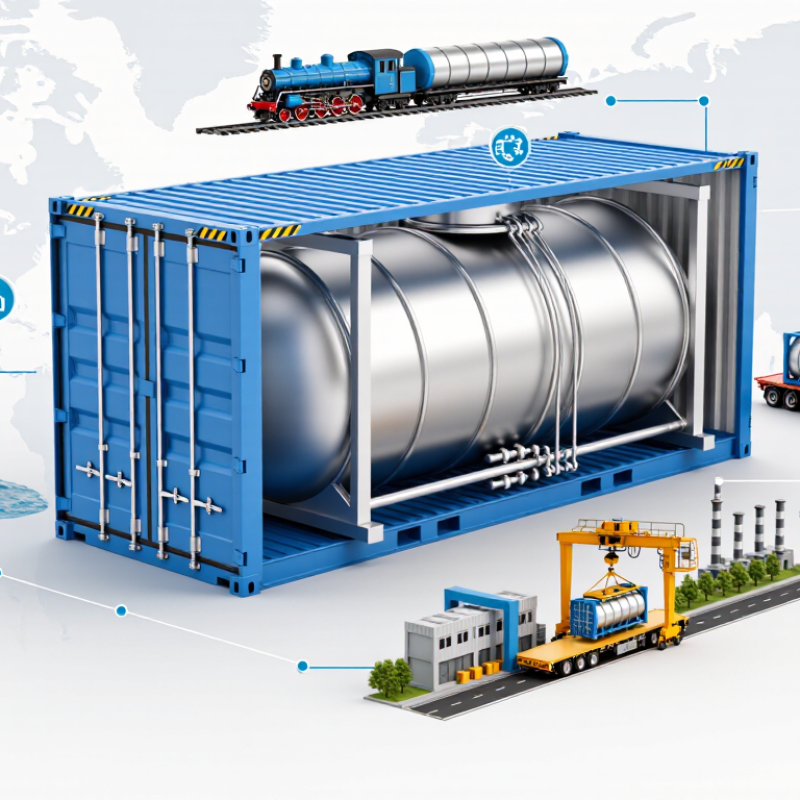
Table of Contents
[Hide]
What Is a Tank Container and How Does It Work?
A tank container is a stainless-steel vessel built inside a standard intermodal frame. Most units are designed for roughly 14,000 to 26,000 litres of liquid cargo. The frame fits ships, rail wagons, and road chassis. This allows one tank to travel through several transport modes without transferring the liquid itself. It is a practical form of intermodal shipping.
The working process is straightforward, but not effortless. A certified facility loads the liquid through a top or bottom valve. Pressure controls, safety valves, and temperature readings help protect the cargo during movement. Operators inspect seals, valves, and fittings before departure. At the destination, equipment connects to the discharge valve, and pumps or controlled pressure remove the liquid. Small mistakes matter. Poor cleaning can affect the next load.
The International Tank Container Organisation reported approximately 801,800 tank containers in global service in its 2024 fleet survey. That scale reflects growing demand for reusable liquid transport equipment. UNCTAD’s Review of Maritime Transport 2024 also highlights the continuing importance of containerized intermodal networks in international trade. Tank containers can reduce repeated handling and support more consistent scheduling than single-use packaging. However, they need suitable terminals, trained personnel, and cargo-specific inspections. They are not automatically the cheapest option. Weight limits, heating requirements, and return logistics can change the calculation. Good planning begins with the liquid’s properties, route, and unloading conditions.
Why Choose a Tank Container for Global Shipping? - What Is a Tank Container and How Does It Work?
| Data Dimension | Typical Specification or Fact | How It Supports Global Shipping |
|---|---|---|
| Definition | A tank container is a cylindrical pressure vessel mounted inside a standardized intermodal frame. | The same unit can be moved by ship, rail, and road without transferring the liquid between different containers. |
| Common ISO frame length | Approximately 20 feet for the most widely used tank-container format. | The standardized footprint is compatible with common container-handling equipment and intermodal transport systems. |
| Typical capacity range | Approximately 14,000 to 26,000 litres, depending on tank design, cargo density, and applicable regulations. | The capacity is suitable for many liquid bulk cargoes while remaining within standard intermodal size and weight limits. |
| Tank construction | Usually fabricated from stainless steel, with insulation, heating equipment, or protective coatings available for certain cargoes. | The tank can be selected according to chemical compatibility, temperature requirements, hygiene needs, and cargo handling conditions. |
| Cargo compatibility | Used for many non-hazardous and hazardous liquids, including chemicals, food-grade liquids, oils, and liquid gases in purpose-built tanks. | A suitable tank specification helps reduce contamination, leakage risk, and the need for cargo-specific packaging changes during transit. |
| Loading method | Cargo is commonly loaded through a top or bottom connection using pumps, hoses, and approved fittings. | Closed-transfer systems can improve handling efficiency and limit exposure to air, moisture, or personnel. |
| Discharge method | The liquid is discharged through dedicated valves by gravity, pump, or pressurized unloading, subject to the tank design. | Direct discharge reduces the number of cargo-transfer steps and can shorten unloading time at the destination. |
| Pressure classification | Tank containers are built to defined pressure categories; the allowable working pressure varies by tank type and cargo. | Choosing the correct pressure rating is essential for safe transport of pressurized, volatile, or temperature-sensitive products. |
| Temperature control | Insulated tanks and steam, hot-water, or electric heating systems may be used for cargoes that require controlled viscosity or temperature. | Temperature management can help keep products pumpable and maintain required cargo specifications during loading, transit, and discharge. |
| Safety and compliance | Tanks must meet applicable international, national, and modal requirements, including inspection, marking, valve, and pressure-test rules. | Regulatory compliance supports legal movement across borders and helps control risks related to spills, pressure, fire, and hazardous materials. |
| Multimodal flexibility | A tank container can be transported by road, rail, and ocean freight within one intermodal movement. | It reduces the need for repeated cargo pumping and can simplify international supply chains involving several transport modes. |
| Operational efficiency | The cargo remains in the same tank from origin to destination, subject to handling and regulatory requirements. | Fewer transfers can reduce handling labour, product losses, contamination opportunities, and turnaround time. |
| Environmental considerations | Tank containers are reusable assets and can carry bulk liquids without relying on numerous single-use drums or smaller packages. | Reuse may reduce packaging waste and improve cargo volume efficiency, although cleaning, repositioning, and return transport must also be considered. |
| Cleaning requirements | Tanks generally require cleaning and inspection between compatible or incompatible cargoes, with procedures determined by the product and regulations. | Proper cleaning protects cargo quality and helps prevent chemical reactions, odour transfer, and cross-contamination. |
| Main limitations | Higher suitability requirements, cleaning costs, weight restrictions, and specialized handling may apply compared with ordinary dry containers. | A tank container is most effective when the cargo volume, compatibility, route, equipment availability, and regulatory requirements are assessed in advance. |
Related Posts
-
China Top ISO Tank Container Manufacturers Suppliers
-
2026 Top Iso Tank Container Types for Global Buyers
-
How to Choose the Right Tank Tainer for Your Business
-
Exploring the Features and Applications of Best Iso Tank Containers: A Comprehensive Guide
-

Unlocking Advantages of Isotainer Tanks for Safe and Efficient Chemical Transport
-

Top Strategies for Maximizing Efficiency with Iso Liquid Containers