How to Choose a 3D CNC Automatic Tube Bending Machine
Choosing a 3D CNC Automatic Tube Bending Machine is less about buying the biggest frame and more about matching the machine to real parts. A tube that looks simple on a drawing may need tight-radius bends, several bend planes, or careful control of springback. Small differences in material grade, outside diameter, and wall thickness can change the result. Measure the parts you make most often, then include your hardest recurring job—not just the easiest sample.
Quality expert W. Edwards Deming’s reminder, “In God we trust; all others must bring data,” offers a useful principle for machine selection. Ask suppliers to demonstrate your tube geometry using your actual material, tooling, and target tolerances. Watch how the machine handles feeding, rotation, clamping, and mandrel support. Check the finished part for angle accuracy, surface marks, and repeatability across a short production run. Numbers matter. A polished demonstration alone does not prove the machine will suit your shop.
This guide explains how to compare bending capacity, control features, tooling options, programming, service support, and total operating costs. It also considers practical details: floor space, operator training, changeover time, and how quickly a new job can move from drawing to first-off part. A tidy brochure cannot settle every question. And some choices remain imperfect: a machine optimized for high-volume work may not be the best fit for frequent, low-volume changes. Use the criteria here to ask sharper questions, verify claims with test bends, and choose a 3D CNC Automatic Tube Bending Machine that fits the work you actually run.
Understanding 3D CNC Automatic Tube Bending Machines
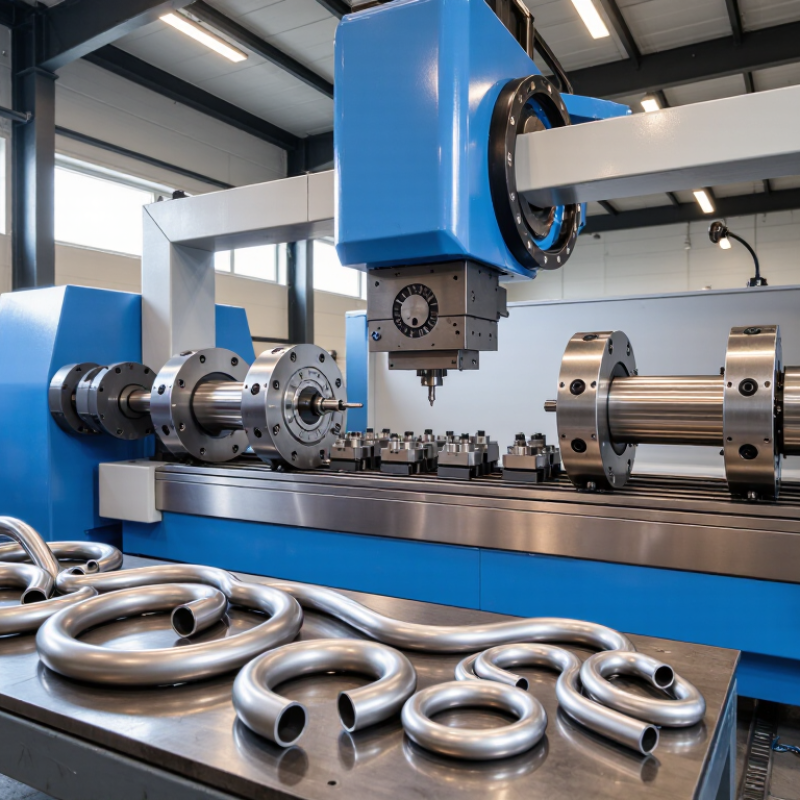
A 3D CNC automatic tube bending machine forms a tube through bends in multiple planes, following a programmed sequence. The machine typically controls tube feeding, rotation, and bending, so one part can include several angles without repeated manual repositioning. In practice, the finished shape depends on more than the program. Tube diameter, wall thickness, material, and bend radius all affect springback and the risk of flattening or wrinkling.
A mandrel supports the tube’s inside wall during tighter bends. It may be useful for thin-walled tubing, but setup and lubrication matter. The bend die, clamp die, and pressure die must also suit the tube dimensions. Small mismatches can leave marks or cause slipping. Test with the actual material. A sample bend often reveals more than a specification sheet.
When evaluating a machine, consider its usable diameter range, minimum bend radius, tool-change time, and control-system capabilities. Check how it stores programs and handles corrections after a trial run. Ask for a demonstration using a part close to your own design. Watch the tube’s movement, not just the finished piece. A complex machine is not automatically the right one; production volume and part variety should guide the choice. Even experienced operators may need several trials when material batches behave differently.
How to Choose a 3D CNC Automatic Tube Bending Machine
Understanding the part dimensions your machine must handle
Example part specification—not a universal machine rating. Compare the tube’s outside diameter and wall thickness with the machine’s rated capacity, and confirm it can achieve the required centerline bend radius and straight-leg length. Also check material, bend angle, tooling, and the finished part’s full 3D geometry before selecting a machine.
Defining Tube, Material, and Production Requirements
Choosing a 3D CNC automatic tube bending machine starts with the tube itself, not a catalog’s maximum capacity. Record outside diameter, wall thickness, total length, and tightest centerline radius. Include straight-leg lengths and bend sequence; closely spaced bends may need more clearance than the drawing suggests. For welded tube, note seam position and ovality. These details affect clamping, mandrel choice, and springback. Small details count.
Material changes the process. Stainless steel, aluminum, and mild steel differ in strength, ductility, and springback. Temper and batch variation matter, too. Share the material grade and condition, then test representative samples. Measure angles after unloading, not only while the tube sits in the die. A good first part is encouraging, but repeatability across a full shift matters more. It is easy to over-specify; actual production data can correct that.
Tips: Define daily volume, changeover frequency, acceptable tolerances, and available floor space. Bring a real part drawing and a sample tube to the evaluation. Test a difficult bend sequence before scaling production. A smooth demo is not the whole story.
Comparing Machine Capacity, Accuracy, and Bending Features
When choosing a 3D CNC automatic tube bending machine, compare capacity with your actual tube range. Check maximum outside diameter, wall thickness, bend radius, and material strength. A machine rated for larger tubes may lose speed or stability on thin-wall parts. Ask for sample bends using your own material, not only idealized test stock. Small differences in wall thickness can change springback.
Accuracy is more than the displayed angle. Check repeatability, feed-length control, and rotation accuracy, then confirm how the supplier measures them. ISO 230-2 provides methods for testing machine-tool positioning accuracy and repeatability. For tube bending, also inspect finished parts with a gauge or coordinate measurement system. The International Federation of Robotics’ World Robotics 2024 report counted 4,281,585 industrial robots operating worldwide in 2023, reflecting broad automation adoption—not a guarantee that every automated cell suits your part. Consider whether the machine offers multi-stack tooling, automatic lubrication, and collision detection. Useful features depend on your part mix.
Tips: Bring drawings and a few representative tubes to a trial. Record bend angle, ovality, cycle time, and scrap across repeated runs. Compare results after tool changes, too. It is easy to overvalue a long feature list; I would still question whether each option improves a real production constraint.
Evaluating Software, Tooling, Safety, and After-Sales Support
Software should do more than display a bending path. Check whether it imports your CAD files, supports bend-sequence simulation, and flags possible collisions. Springback compensation matters, especially when material batches vary. Run a sample part through the workflow before purchase. A screen preview is useful, but it cannot replace a physical trial.
Tooling must match the tube’s diameter, wall thickness, and material. Ask which bend dies, clamps, mandrels, and wiper dies are included, and what changeover requires. Small fit differences can leave marks or cause wrinkles. Safety deserves the same close inspection. Look for guarded moving parts, accessible emergency stops, and clear interlocks. Watch the machine cycle, not just its brochure. Operator training still matters.
After-sales support can determine how quickly production recovers from a fault. Confirm installation, training, troubleshooting, spare-parts availability, and realistic response times in writing. Ask who handles software updates and whether support covers your specific tube sizes. A simulation can look clean and still miss a setup issue. That is worth remembering. Compare sample bends for angle accuracy and repeatability, then review the results with the supplier before committing.